
After mainly working on the website, it is now time to think about the first software tools that could gradually give shape to AppErgo.
Introduction
From the beginning, AppErgo was never meant to remain just a website. The site is a foundation, a showcase, a place for presentation and experimentation, but the goal is to progressively build a small software workshop, publish my own applications, and receive user feedback in order to debug and improve them over time.
This is also part of the original idea behind the project, which I already explained in more detail in Why AppErgo? And who am I?.
For now, a large part of the work is still focused on the website itself: cleaning pages, improving the structure, fixing the CSS design, writing the first articles, preparing future sections, and making the whole project feel more coherent. This is necessary, but it naturally slows down the return to software development.
That is not necessarily a bad thing. The idea is not to release a large amount of software as quickly as possible, but rather to move forward properly, with projects simple enough to regain momentum, yet useful or interesting enough to stay motivating.
1. Hash Generator
The first planned project could be a hash generator.
It would be a deliberately simple tool capable of generating a hash from text, or possibly from a file as well. Nothing spectacular at first glance, but precisely because of that, it is probably the ideal kind of project to get back into development.
It would allow me to slowly get comfortable with C++ again, return to working inside an IDE, rebuild a clean compilation workflow, and work on a small interface without immediately getting lost in a project that is too ambitious.
There is also a practical side to it. I sometimes use online tools to quickly generate hashes, but having a lightweight offline version can be both more practical and more reassuring. Not everything necessarily needs to be sent to a third-party website when a small local application can do the job perfectly well.
A simple application like this would also make it possible to continue working on the website in parallel. It could help test sections that are not yet enabled, such as Forge, Utilities or Downloads, as well as homepage quick-access blocks or even some statistics inside the admin interface.
2. Hash Checker
Following the hash generator, a second project could be a file hash checker.
The idea is straightforward: pick a file, paste the expected hash, and check whether both values match. A small tool, but a useful one when you want to make sure a download has not been altered or corrupted.
This project would also have a direct connection with AppErgo itself. Eventually, downloadable files on the website will likely include a SHA256 checksum. A verification tool would then make it easy to confirm that a downloaded file is exactly the expected one.
I also prefer to keep this tool separate from the hash generator. Not everyone necessarily needs both functions at the same time. Keeping applications readable, lightweight and specialized fits much better with the spirit I want AppErgo to have.
3. Color Picker
The color picker is another project I would really like to develop.
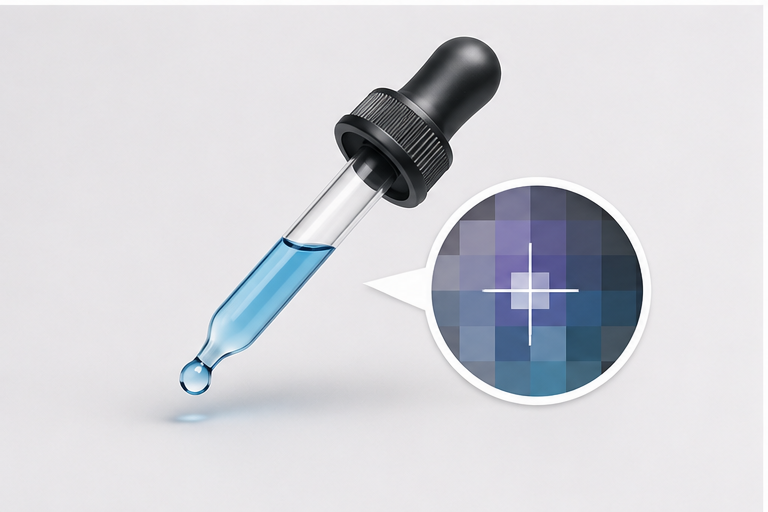
At first glance, the concept sounds simple enough: capture the color currently under the cursor and quickly copy it in different formats. It is the kind of small utility that can be useful from time to time without requiring the launch of a large application.
But once you start thinking about it more seriously, the project quickly becomes less trivial. Precision, multi-monitor behavior, DPI scaling, keyboard shortcuts, responsiveness, and overall usability all become important concerns.
That is exactly what makes this type of project interesting. It appears simple, yet it raises many practical questions about user experience and ergonomics. It would probably require more work than the first two projects, but it also matches the spirit of AppErgo very well: building small, useful and pleasant applications.
Unfortunately, I suspect that starting with such a project, as I originally intended, would not really be compatible with continuing the website development in parallel. The site itself still requires a significant amount of work before reaching a fully operational and stable version.
4. Guitar Tuner
The most ambitious project currently planned would probably be a guitar tuner.
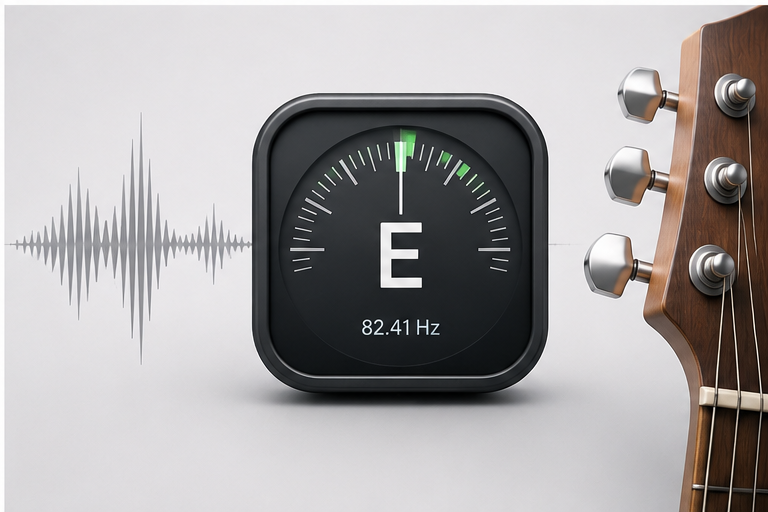
Tuner applications already exist everywhere nowadays, especially on smartphones where they are always accessible and easy to use. On PC, the topic may feel less common today, but it remains extremely interesting from a technical point of view. It would make it possible to work on sound processing, note recognition, frequency analysis, and potentially open the door to more advanced audio software later on.
At first glance, a tuner seems relatively simple. Capture audio, detect a frequency, and display the corresponding musical note. But in practice, things become much more complicated once speed, stability and accuracy start to matter.
Low frequencies already introduce specific difficulties. The software needs enough information to correctly detect pitch while still avoiding excessive latency. Polyphonic recognition introduces an entirely different level of complexity on top of that.
A few months ago, I already experimented with a very basic tuner written in C++. It worked to some extent, but making the software truly reliable, fast and accurate would require much more research and experimentation around the underlying algorithms.
Because of that, this project is clearly not planned for the near future. At first, the goal would mostly be to research, explore different approaches, test algorithms internally, better understand their limitations, and progress slowly over time. The subject is vast, but also genuinely fascinating.
Conclusion
Of course, this list is far from definitive.
Other ideas may come later. Even a very small utility can be worth building if it helps me learn, test something, or solve a real need.
In the end, I would rather follow projects that make me want to keep going. If a tool is useful to me, interesting to build, or teaches me something, then it probably has its place in AppErgo.
AppErgo will therefore continue evolving at its own pace, between website improvements, articles, technical research, and software development. The first application may end up being extremely simple, but it will already help test the entire workflow: creating, publishing, documenting, downloading, debugging, and improving.