A game lasting only a few minutes can require very different skills depending on what you play: anticipating an opponent’s move, remembering a position, deducing where a mine is hidden, finding a missing word or simply reacting quickly enough to avoid a wall. AppErgo’s Games category brings together 12 games designed to run directly in the browser. It includes classics such as Tic-Tac-Toe, Connect Four, Snake, Minesweeper, 2048 and Sudoku, as well as memory, deduction, vocabulary and knowledge games. Their purpose is not to replace more complex games, but to offer quick sessions with easy-to-understand rules and no installation required.
Strategy for two players or against the computer
Tic-Tac-Toe is played on a 3 × 3 grid where X and O take turns until one player forms a line of three symbols. Despite its extremely simple rules, position matters: the center belongs to more possible winning lines than a square on the edge, and the opponent’s threats must constantly be watched. The game can be played by two people on the same device or against the computer, with wins and draws tracked across several rounds.
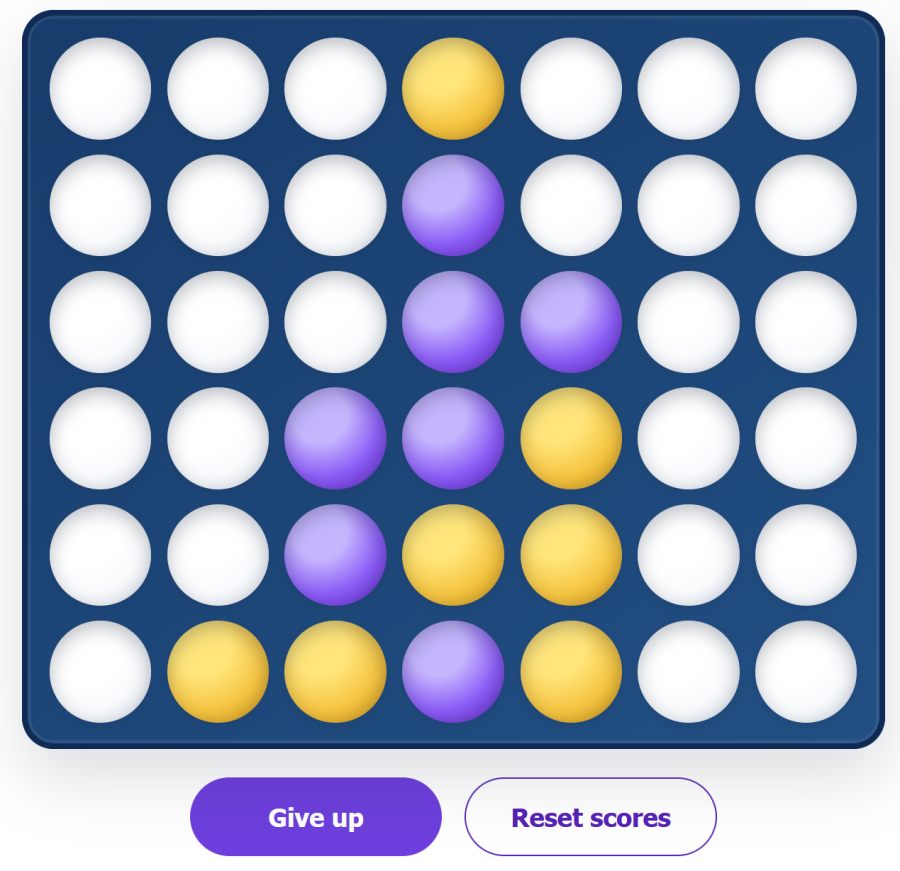
Connect Four expands the alignment principle to a grid of 6 rows and 7 columns. Pieces automatically fall to the lowest available position in the selected column, adding an important constraint: you need to build your own lines while avoiding positions that benefit your opponent. The central columns offer more possibilities, and an effective strategy often involves creating several threats at the same time. Like Tic-Tac-Toe, the game supports both two-player and computer modes.
Memory, concentration and reflexes
The Memory Game challenges you to find matching pairs of cards by gradually remembering their positions. Several grid sizes make it possible to adjust the difficulty, while a temporary preview can be used either as a hint or as a more direct memory exercise. The number of moves, pairs found and elapsed time can then be used to compare different games.
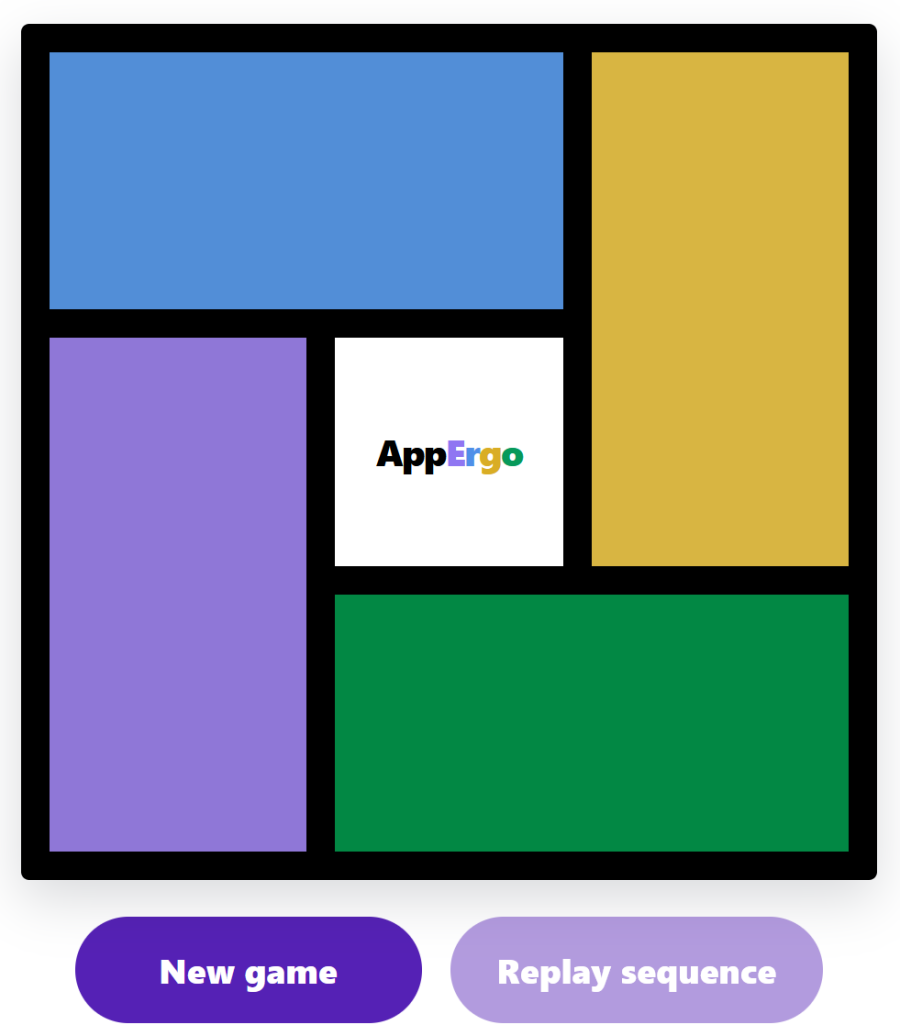
Simon uses a different kind of memory. A sequence of signals is shown and must be repeated in the same order. After every successful round, another element is added. Several speeds and display modes change the difficulty, including a no-help mode that limits the possibility of replaying the current sequence. As the sequence grows, grouping signals into smaller patterns can become easier than remembering a long series of isolated elements.
With Snake, reflexes and space management become the priority. The snake moves continuously across a grid and grows every time it eats an apple. As the score increases, its own body leaves less room to move. You therefore need to anticipate several moves ahead, avoid trapping yourself and sometimes take a longer route to preserve an escape path. Three speeds are available, with separate high scores for each one.
Logic, deduction and puzzles
Minesweeper is mainly about interpreting clues. Each number indicates how many mines are located in the surrounding squares, allowing safe cells and likely mine positions to be identified gradually. The first move is protected to avoid losing immediately through simple bad luck, and several board sizes provide different levels of difficulty.
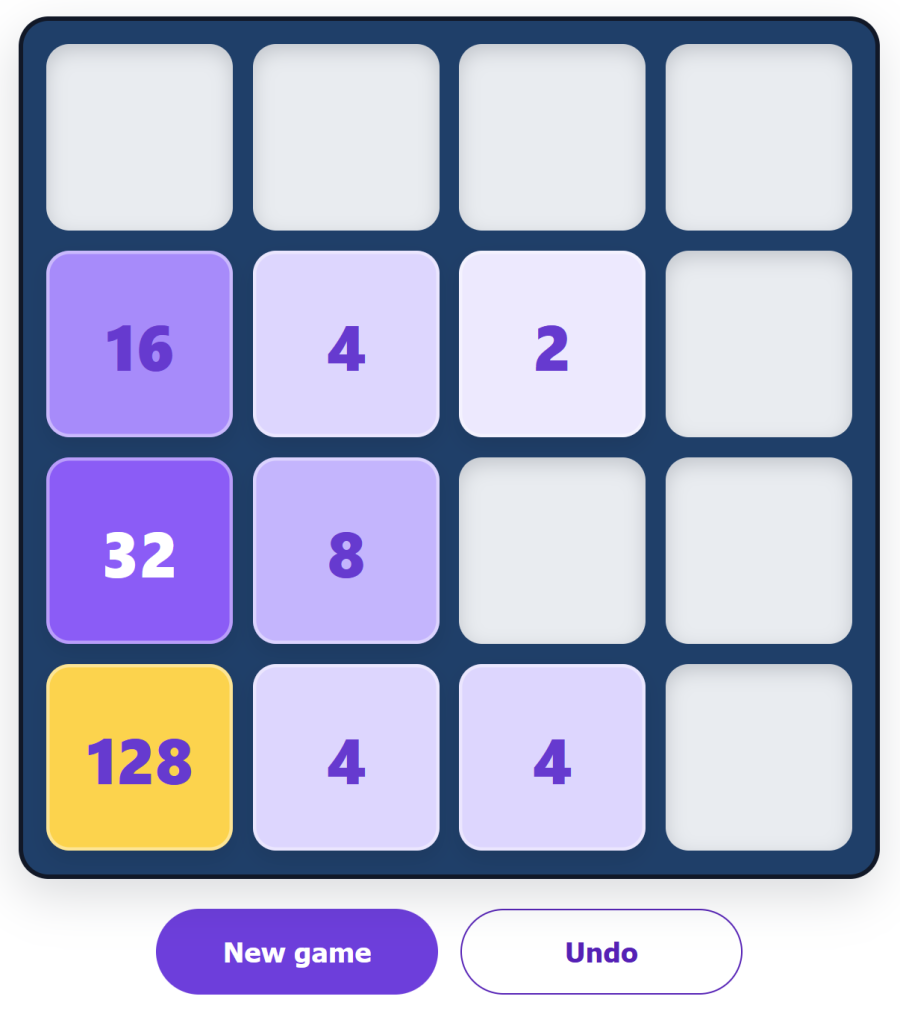
2048 uses a 4 × 4 grid where tiles of the same value merge when they meet. Two 2s become 4, two 4s become 8, and the values continue increasing until 2048 and potentially beyond. The rules are simple, but the challenge comes from organizing the entire board. A common strategy is to keep the highest-value tile in one corner and gradually build the other values around it.
Mastermind challenges you to find a secret color combination using clues. After each attempt, markers indicate how many colors are correct and in the right position, or correct but placed elsewhere, without directly revealing which colors they refer to. The key is therefore to compare successive attempts and gradually eliminate possibilities rather than simply guessing at random. Several settings can change the code length, number of attempts and whether duplicate colors are allowed.
The Sliding Puzzle presents shuffled numbered tiles and a single empty space. Since only a tile next to that empty space can move, restoring the correct order requires planning several moves ahead. Three grid sizes, 3 × 3, 4 × 4 and 5 × 5, provide very different levels of difficulty. Time and number of moves are recorded so that different solutions can be compared.
Simple Sudoku uses the classic 9 × 9 grid divided into nine blocks. Each digit from 1 to 9 must appear exactly once in every row, column and block. It is not really a calculation game, but a puzzle based on constraints and eliminating possibilities. A checking system helps identify mistakes, and a hint can be requested when no obvious move remains.
Vocabulary and knowledge
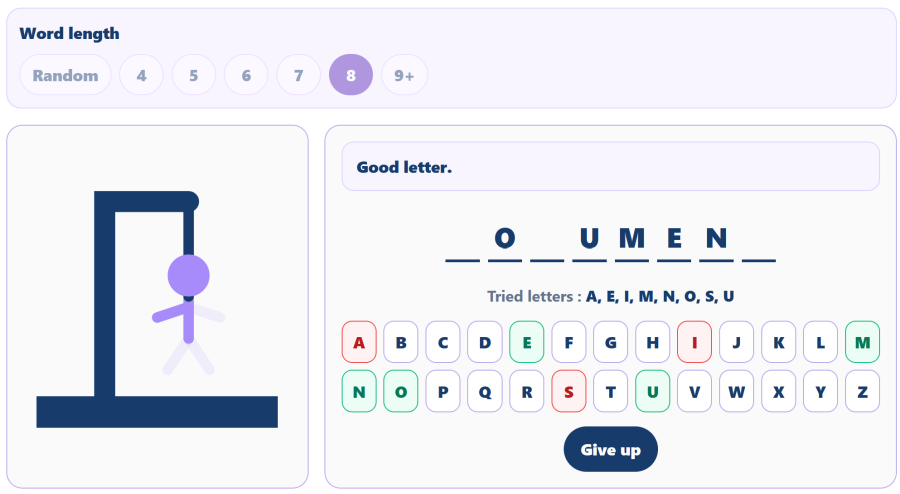
Hangman challenges you to find a hidden word by suggesting letters one at a time before reaching the maximum number of errors. Several word lengths can be selected, with the game choosing from its own word list. Common letters can provide useful information early in the game, while the length of the word and the position of letters already revealed become increasingly important as the solution takes shape.
The True or False Quiz takes a different approach by presenting a series of statements that must be answered with True or False. The currently available theme focuses on birds, with several difficulty levels ranging from general knowledge to more specific questions. After each answer, a short explanation shows why the statement was correct or incorrect, so the game is not limited to producing a final score.
Simple games with very different challenges
These games often share very simple controls without necessarily being easy to master. Tic-Tac-Toe uses only nine squares, yet avoiding defeat already requires recognizing certain threats. 2048 uses only four directions, but consistently building high-value tiles requires careful organization. In Minesweeper or Mastermind, just a few clues can create genuine deduction problems.
Randomness also plays very different roles. It may simply create the initial situation, as in Memory, Hangman or Mastermind, or continue to affect the game, as with new tiles appearing in 2048 or new apples in Snake. In every case, memory, strategy, logic or reflexes then determine most of the outcome.
Several games also make it possible to track progress. Snake and 2048 focus on score, Memory and the Sliding Puzzle allow time or number of moves to be compared, Simon measures the length of the sequence successfully reproduced, and the quiz uses a percentage of correct answers. Even when the rules remain unchanged, improving your own result provides a reason to play again.
Quick games that run directly in the browser
The games are designed to work as well as possible on computers, tablets and smartphones. Depending on the game, controls use the mouse, keyboard or touchscreen directly: Snake and 2048 can, for example, be controlled with gestures, while Sudoku includes its own number pad.
Games are handled locally in the browser. The Sudoku grid, Mastermind combination, Memory cards or Snake movements do not need to be sent to a server for the game to work. Some scores or preferences may be stored locally on the device when useful.
All 12 games are available for free in AppErgo’s Games category, with no account or installation required. Strategy, memory, logic, vocabulary, knowledge or reflexes: each offers a different type of gameplay for a quick break or an attempt to improve your previous result.